
Key Takeaways
- Wandering can happen at any stage of dementia and isn’t done on purpose.
- Memory changes, restlessness, or unmet needs like hunger or thirst can trigger it.
- Steady routines, gentle activity, and calm spaces can lower how often it happens.
- Door chimes, night lights, ID bracelets, and GPS options add reassurance.
- Calm redirection works far more smoothly than arguing.
- Memory care and respite care give families support and rest.
What to Know About Wandering and Dementia
You can’t find your mom’s shoes in the shoe cabinet at 2 AM. That’s how you know she’s wandering again, just like yesterday. Our team at All American Assisted Living at Hillsborough understands that moments like these can leave you worried. Fortunately, there are gentle ways that can bring more peace of mind to both you and your loved one.
Wandering can be managed through predictable daily routines and meaningful activities. Thoughtful home setups, calm responses, and memory care also help.
What Wandering Looks Like in Dementia
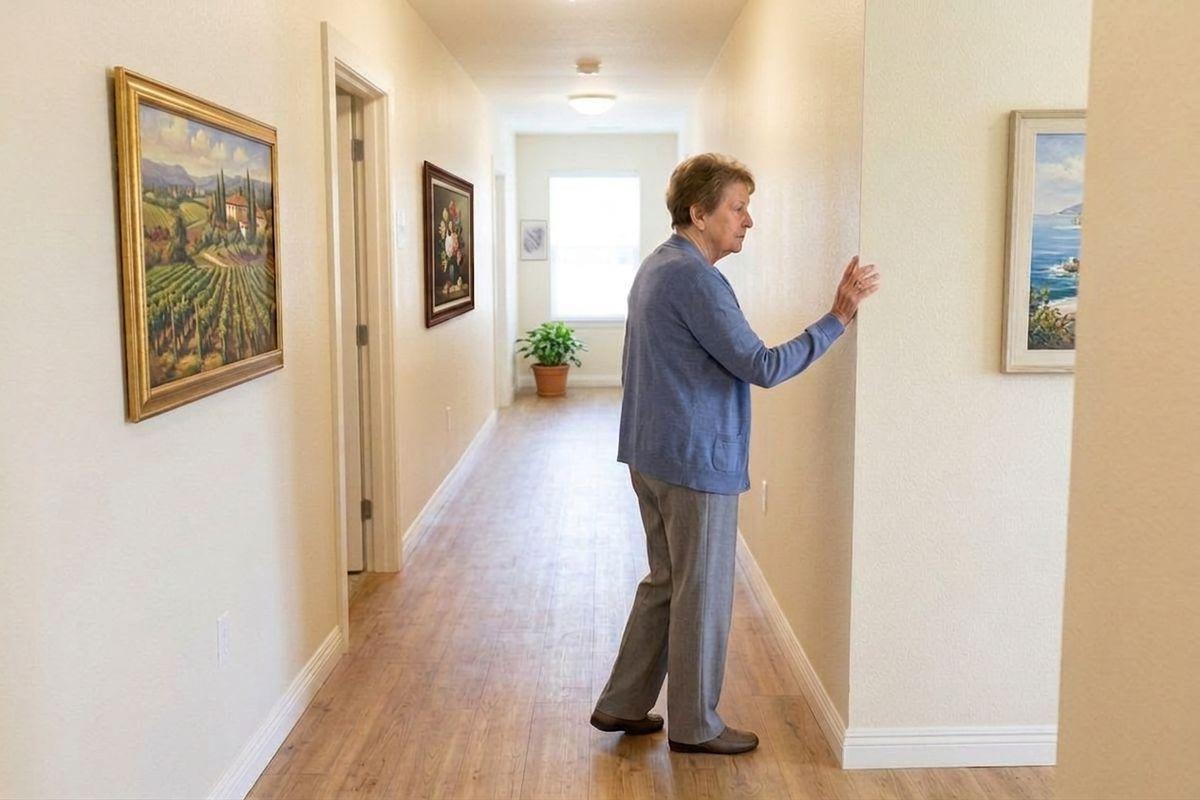
Wandering doesn’t always involve someone leaving the house. Pacing from room to room could be wandering. Stepping out the front door with no clear destination could also be wandering.
This behavior can show up at any stage of dementia. It’s a common part of the condition. And it’s important that you know your loved one isn’t trying to worry you.
Signs Someone May Be at Risk
Small changes often come before wandering does. You might notice a few of these:
- Trouble finding a familiar room, like the bathroom in their own home
- Talk of “going home” while already at home
- Mentions of heading to work or picking up the kids
- Restlessness, pacing, or repeated movements such as tugging at a coat
Noticing these early signs gives you time to make simple adjustments before anything stressful happens.
Why Wandering Happens
Memory loss and disorientation play a huge role in wandering. To those living with dementia, a hallway that once felt familiar can suddenly feel unrecognizable. And when that happens, moving becomes the only way to search for something that feels right to them.
There are other reasons for this behavior as well. Boredom, restlessness, and even plain curiosity can send someone walking. What’s worth knowing is that an unmet need, such as hunger and thirst, can also contribute to wandering.
Behavior as Communication
Wandering often carries a message. Fear, loneliness, and confusion can all show up as movement when speech becomes limited.
While wandering can be concerning, things often settle faster when you acknowledge the feeling behind that behavior. A gentle voice and a hand to hold are both great for easing the confusion and tension. You can also look into simple ways to talk with someone living with dementia to make these moments easier.
Daily Habits That Lower the Chance of Wandering
For those living with dementia, predictability is particularly calming. When meals, rest, and activities happen around the same time each day, the day takes on a reassuring sense of familiarity. Structured daily routines are a big part of why memory care feels so steady.
Meaningful activity helps too. Think folding towels, sorting photos, watering plants, or a short walk after lunch. These light tasks give a restless mind something to shift its attention to. In addition, gentle daily exercise can often make evenings easier.
The space itself matters too. A quieter room with less clutter and softer lighting can help your loved one feel more grounded throughout the day.
Times of Day to Watch
For most people with dementia, late afternoon and early evening bring more restlessness. You may notice more pacing right as the light fades and the house grows busier.
That’s why it’s wise to plan something soothing for those hours. Put on some familiar music or a favorite show. Gentle sensory stimulation can turn a restless stretch into a comfortable one.

Home Setup and Safety Steps for Families
A few simple changes can make a home much safer. There are many helpful adjustments and additions that can benefit a loved one with dementia:
- Door chimes that signal an open door
- Motion mats near beds and exits
- Night lights along hallways and bathroom paths
- Labels or pictures on doors for rooms like the bathroom
- A clear walking path indoors or in a fenced yard
Plan Ahead for Peace of Mind
Preparation is key to preventing unnecessary stress. An ID bracelet, labels sewn into clothing, and GPS options in a shoe or watch can help locate someone quickly. You can review some common home safety issues for other measures that you can take.
Keep a recent photo on your phone and a short list of places your loved one might head toward. Depending on their life experience, it might be a former home or an old workplace. Don’t be afraid to let neighbors and local police know about your loved one’s tendency to wander. It’s always helpful to have a few extra pairs of eyes looking out for them.
Calm Responses in the Moment
If your loved one heads for the door, skip the debate. Arguing or holding someone back usually raises everyone’s stress.
Walk alongside them instead. After a minute or two, you can gently guide the conversation elsewhere. After that, head toward home with an offer of a snack or a seat.
If a loved one does go missing, search the immediate area first. That includes nearby yards. Then call 911 right away.
Support and Next Steps for Your Family
Caring for someone living with dementia is a demanding task, and you don’t have to manage all of this alone. At All American Assisted Living at Hillsborough, memory care is designed around safe movement, familiar routines, and engaging activities. Caregivers in our community respond with patience and strive to make your loved one feel understood at every moment.
Come see our community for yourself. You can ask about daily routines and how our team supports each resident. Know that our team is always here to help. You just need to reach out to schedule a tour whenever you’re ready.