

Key Takeaways
- Parkinson’s symptoms shift from day to day, so flexibility helps more than a rigid schedule.
- Small home adjustments, like clear walkways and bright lighting, support safer movement.
- Gentle activity and familiar hobbies can lift mood and encourage independence.
- Assisted living and memory care can adapt as needs change over time.
What Caregivers Should Know About Parkinson’s Support
You’ve probably noticed some small changes. A hand that trembles while holding a coffee cup, or a slower walk down the hallway. Caring for someone with Parkinson’s takes more than just compassion. It calls for an attentive eye for those quiet changes. Our team at All American Assisted Living at Hillsborough understands how much energy that takes.
There are many ways to support a loved one with Parkinson’s. But usually it comes down to creating a safer environment at home, building routines around energy levels, and devising a flexible care plan. That process can feel overwhelming, but it becomes a lot more manageable when it’s broken down into smaller steps. Learning about the senior living care options available can help you plan at your own pace.
What Parkinson’s Looks Like Day to Day
Parkinson’s affects movement. That impact shows up differently in each person. Tremors, muscle stiffness, and slower movement are common. Balance may also change, and speech may become softer. Fatigue can sometimes settle in earlier in the afternoon than it used to. Learning about the basics of Parkinson’s can help you know what to watch for.
Symptoms also tend to shift with time. A morning that feels steady may turn into an afternoon that feels harder. That’s a common occurrence with Parkinson’s that many caregivers learn to anticipate.
Changes You May Notice First
Early signs are often subtle. You might see handwriting that has grown smaller and tighter. Or perhaps you’ve noticed that one arm barely swings during a walk.
Everyday tasks can take longer, too. Are they sighing and grunting as they button their shirt? Other activities of daily living, like cooking and bathing, are also prone to the gradual impact of Parkinson’s.
Common Challenges Families Face
A few situations tend to come up repeatedly for families.
- Freezing episodes, where feet seem stuck near doorways, turns, or narrow spaces
- Mealtime changes, including slower eating and swallowing differences
- Shifts in thinking or memory
- Changes in mood, energy, or motivation
Keeping track of these moments helps. When you know what to expect, you can plan around it in calmness. Some families also read up on the early signs of dementia so they know what cognitive changes may come alongside.
How to Support Safe Movement at Home
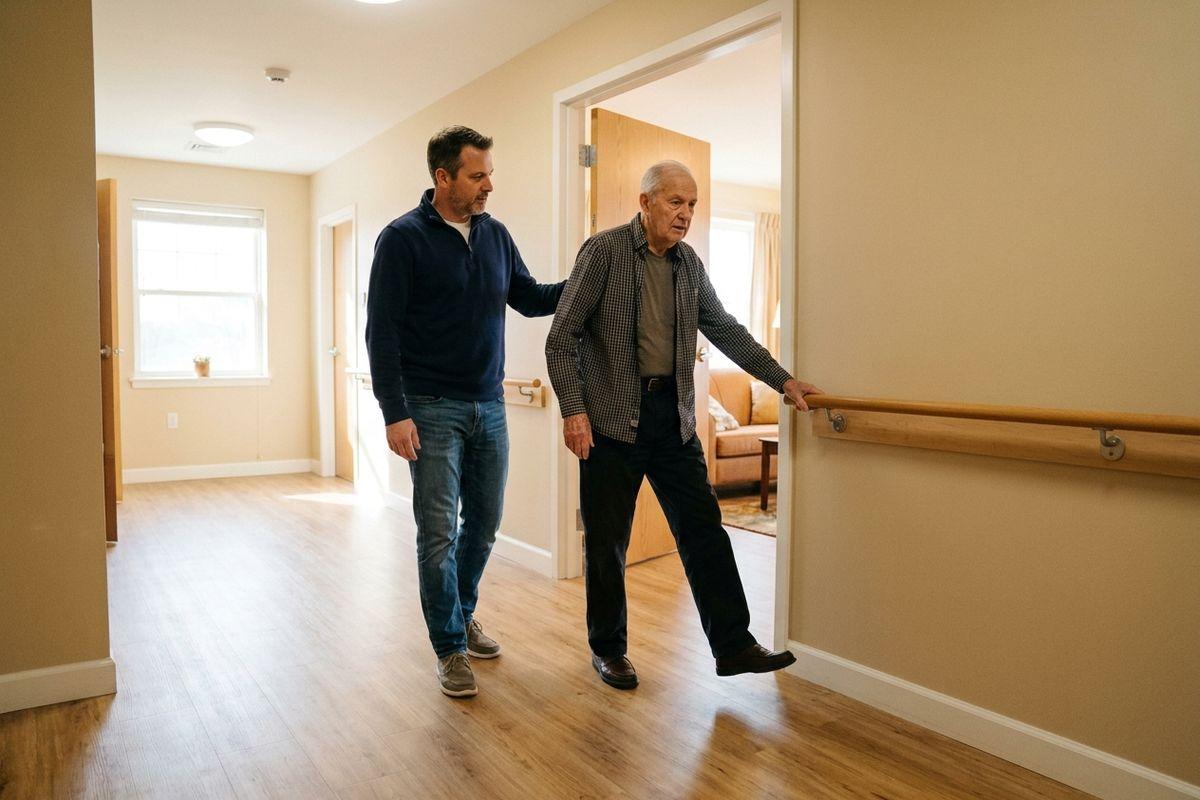
The home you already have can become a lot more supportive with a few changes. To begin with, clear the main walking paths. Move loose rugs, cords, and low furniture out of the way. Reviewing home safety issues room by room can make this process easier.
Grab bars in the bathroom are great for providing steady support near the shower and toilet. Good lighting also matters. Make sure that the path from the bedroom to the bathroom at night is well-lit.
Wide-radius turns also help. Pivoting in a tight circle can be dangerous for those living with Parkinson’s. Instead, encourage a slow curve made in small steps.
Simple Cues That Help
Short verbal cues can make movement more manageable. Try phrases like “big steps” or “heel first” as your loved one walks.
Before standing, check foot placement together. Are their feet flat on the floor and slightly apart? That posture gives them a steadier base to rise from. These cues can help with moving safely and confidently.
A Plan for Falls
Having a plan takes some of the worry out of the day. Decide ahead of time who to call for help. Once you’ve decided on an emergency contact, write down their number and put it somewhere easy to see, like on the fridge. For extra peace of mind, you can also read up on prevention tips for falls and fractures in seniors.
Keep a phone within reach in the rooms used most. And consider a wearable alert button for emergencies. There are other daily living aids that can add support too.
Daily Routines That Make Life Easier
Energy levels guide many parts of life. Schedule appointments, showers, and outings during the hours when your loved one feels most rested. Leave the quieter hours open so they can rest up for the next day.
Mealtimes are important too. Consider giving softer, easy-to-eat foods so eating doesn’t feel as exhausting. These measures can make eating more comfortable. Complementing their meal with easy conversations provides an extra layer of emotional reassurance.
Hobbies and Gentle Movement
Movement and enjoyment go hand in hand. Options worth exploring include the following.
- Walking, stretching, or gentle dance
- Tai chi for balance and rhythm
- Swimming or water exercise
- Music, gardening, painting, or social groups
These activities support mood as much as mobility. A morning spent potting herbs can change how the whole day feels. A personalized fitness program is also worthwhile, as it builds on what your loved one already enjoys.
Community Options That Support Parkinson’s Care
Senior living communities are built with accessible design that balances dignity and safety. Wide hallways, reachable storage, and thoughtful apartment layouts make independence easier to hold onto.
Assisted living adds hands-on help with dressing, bathing, and daily routines. For those living with cognitive conditions, memory care can offer structured, attentive support.
Questions to Ask on a Tour
A visit allows you to learn what a community looks like on any regular day. Keep a few questions handy.
- How are personalized wellness plans created and updated?
- What dining support is available for slower or softer meals?
- Which activities encourage gentle movement and social connection?
- How does care adapt as needs change over time?
Next Steps for Your Family
Focus on the person you love, not the diagnosis. The same whimsy, softness, and love are still there. And they deserve room to shine.
Exploring options early gives your family time to choose without pressure. Our team at All American Assisted Living at Hillsborough would love to show you around and answer your questions. Reach out today to schedule a visit and see what daily life could look like here.